
Looking to reduce road noise, engine hum, and rattles inside your vehicle? The right car sound proofing materials can dramatically improve cabin quietness. This guide focuses on 5 effective options optimized for DIY installs, with clear notes on where each choice excels and potential limitations. Ideal buyers include DIY enthusiasts seeking higher insulation, budget-conscious owners wanting solid performance, and those needing coverage for larger panels.
Summary of selected products
| Product | Brand | Coverage | Thickness | Best For |
|---|---|---|---|---|
| KILMAT 80 Mil 36 Sqft | KILMAT | 36 sqft | 80 mil (2.0 mm) | Highest overall insulation, larger panels |
| KILMAT 50 Mil 50 Sqft | KILMAT | 50 sqft | 50 mil (1.3 mm) | Budget-friendly, easy DIY for moderate noise |
| CUKWUYBY 80 Mil 36 Sqft | CUKWUYBY | 36 sqft | 80 mil (2.0 mm) | Strong heat and noise blocking, 3-layer design |
| VOISEN 197 Mil 31 Sqft | VOISEN | 31 sqft | 197 mil (5.0 mm) | Heavy-duty damping, heat protection |
| Siless 80 Mil 36 Sqft | Siless | 36 sqft | 80 mil (2.0 mm) | Premium automotive damping, value |
KILMAT 80 Mil 36 Sqft Car Sound Deadening Mat

Thickness and thickness-related performance: 80 mil (2.0 mm) of automotive butyl and foil combine for solid noise reduction and vibration dampening. The material is self-adhesive and designed for DIY installation, aiming to deliver greater insulation as thickness increases. With a total weight around 0.5 lbs per square foot, it is light enough to apply in larger areas without excessive handling.
Best for: Builders seeking strong overall insulation on larger panels such as doors and floors. This option is notably effective where a thicker profile translates to more pronounced quieting.
Caution: The heavier weight per area means handling larger sheets can be cumbersome in tight spaces; ensure panel cleanliness and a smooth surface for best adhesion.
KILMAT 80 Mil 10 Sqft Car Sound Deadening Mat

Best for: Small spaces or targeted panels such as a trunk lid, hatch, or small door area where a high-thickness, high-damping product is beneficial without bulk. This product emphasizes ease of DIY installation with strong adhesive backing.
Consideration: While 10 sq ft limits coverage, the 80 mil thickness still provides meaningful attenuation in concentrated spots; plan layout to maximize impact.
CUKWUYBY Car Sound Deadening Mat, 80 Mil, 36 Sqft

Features a three-layer construction: 8-wire aluminum foil for heat reflection, butyl rubber core for airtight blocking, and a strong adhesive backing. The result is strong resistance to road, engine, and wind noise, with good heat management.
Best for: Cars needing robust noise and heat control in larger panels; suitable for regions with higher ambient temperatures due to its heat-reflective layer.
Caution: The multi-layer design may require careful installation to avoid air gaps; precision cutting helps maximize performance.
VOISEN Sound Deading Material for Cars, 197 Mil, 31 Sqft
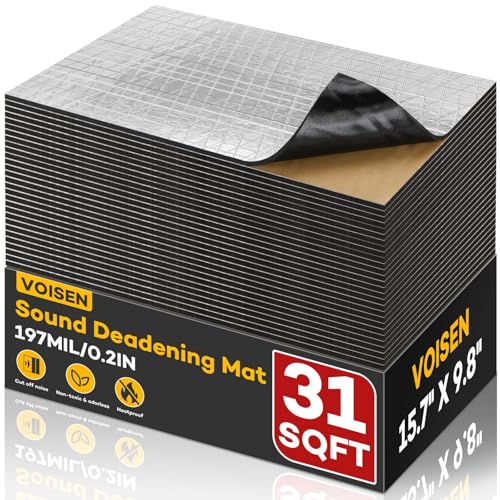
Thickness and heat management: An exceptionally thick 197 mil (5 mm) mat delivers high vibration dampening and heat insulation, covering 31 square feet. It uses a closed-cell foam plus an aluminum surface for durability and water resistance.
Best for: Heavy-duty applications where the cabin needs significant quieting, such as on high-speed highways or in vehicles with louder exhaust notes.
Caution: The extreme thickness may restrict fitment on extremely tight panels; plan panel layout before purchasing for full coverage.
Siless 80 Mil 36 Sqft Car Sound Deadening Mat

Quality-focused option marketed as a robust automotive damping material. The 80 mil (2.0 mm) thickness is designed to deliver strong noise reduction and vibration control, aiming to provide higher cabin quietness relative to thinner variants.
Best for: Car owners who want premium damping in standard-sized panels and value strong performance at a reasonable price.
Caution: As with other thick options, fitment can be tricky on curved or confined surfaces; ensure accurate cutting for optimal results.
Buying Guide: Key Purchase Considerations
- Thickness vs. Coverage: Thicker materials (e.g., 80 mil, 197 mil) usually offer better damping but may add bulk and complicate installation. Balance with intended panel area and available space.
- Layer Structure: Multi-layer products (foil, butyl, adhesive) often provide improved heat reflection and vibration dampening. Consider heat exposure in your vehicle and the need for moisture resistance.
- Adhesion Quality: Strong self-adhesive backing facilitates DIY installs but requires clean, dry surfaces. Surface preparation improves bond longevity.
- Coverage Planning: Large-area panels like doors and floors benefit from higher coverage. For smaller projects, targeted spots can still yield meaningful gains.
- Flexibility and Cutting: Flexible mats are easier to fit into tight curves; rigid mats may require careful trimming. Plan the layout to minimize seams.
- Heat and Weather Resilience: In hot climates or near engine compartments, heat-reflective layers can reduce heat transfer and improve comfort.
FAQ
- What thickness should I start with for a typical sedan?
A: An 80 mil (2.0 mm) mat is a common starting point for larger panels like doors and floor sections, offering strong damping without excessive bulk. - Is it better to use a single thick mat or multiple layers?
A: Multiple layers can improve performance, especially when combining heat-reflective foil with butyl core. For DIY projects, a mix of thickness and coverage often works well. - Can these mats be used on the trunk and roof areas?
A: Yes, larger flat surfaces like trunks and roofs benefit from high-coverage damping, but ensure panels are clean and surfaces are compatible with the adhesive. - Will these mats eliminate all road noise?
A: They significantly reduce noise and vibration, but complete elimination depends on overall vehicle design, exhaust system, and wind conditions. - How long does installation typically take?
A: Time varies by vehicle size and panel complexity; larger vehicles may require several hours to complete thorough coverage. - Are there safety considerations during installation?
A: Work in a well-ventilated area, follow adhesive curing guidelines, and wear gloves to handle sticky materials safely.
