
For header protection, choose a ceramic or high-temperature coating that stands up to extreme heat, resists corrosion, and reduces under-hood temperatures. This guide highlights five strong options best suited for headers, exhaust manifolds, and related components. It targets automotive enthusiasts, hobbyists, and pros seeking durable heat shields without complex lab work. The table below compares the top picks at a glance.
| Product | Brand | Best For |
|---|---|---|
| VHT Flameproof Coating, Flat Black | VHT | Exhaust headers exposed to extreme heat |
| Eastwood High Temperature Internal Exhaust Coating with Extension Nozzle | Eastwood | Internal exhaust surfaces, heat containment |
| Rust-Oleum 260771 Automotive High Heat Spray Paint, 11 oz, Clear | Rust-Oleum | Clear ceramic-like coating for heat resistance |
| Design Engineering High-Temperature Aluminum Silicone Coating Spray | Design Engineering | Exhaust wraps and metal surfaces |
| Rust-Oleum 249340 High Heat Primer Spray Paint, Gray | Rust-Oleum | Rust-resistant base coat for metal engine areas |
VHT Flameproof Coating, Flat Black
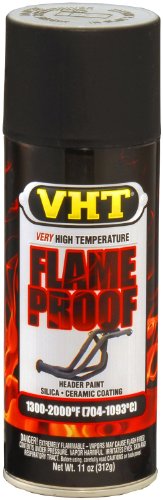
- Best for: Headers and exhaust components exposed to very high temperatures.
- Features: Withstand 1300˚F-2000˚F (704˚C-1093˚C), widely used in automotive exhaust systems, aerospace-grade high heat protection.
- Why chosen: Offers proven high-heat durability suitable for headers and harsh environments.
- Caution: Requires proper curing; follow application directions for optimal adhesion.
Eastwood High Temperature Internal Exhaust Coating with Extension Nozzle

- Best for: Internal exhaust surfaces where heat containment improves under-hood performance.
- Features: Coats inside of exhaust components, reduces under-hood temperatures, withstands up to 1800°F.
- Why chosen: Effective for insulating heat inside pipes and manifolds, supporting cooler engine bays.
- Caution: May require nozzle extension for hard-to-reach areas; ensure complete coverage for best results.
Rust-Oleum 260771 Automotive High Heat Spray Paint, 11 oz, Clear

- Best for: Light to moderate heat protection on engine surfaces needing a clear ceramic-like sealant.
- Features: Ceramic coating with heat resistance up to 2,000°F; oil and gas resistant.
- Why chosen: Clear finish offers protective layer while preserving original component appearance.
- Caution: Clear coatings may require multiple thin coats for even coverage; avoid heavy coats that run.
Eastwood High Temperature Resistant Factory Gray Exhaust Manifold Coating Aerosol 11.75 oz

- Best for: Manifolds requiring a cast-iron look with high heat tolerance.
- Features: Resists up to 1400°F; easy brush or spray-on application.
- Why chosen: Combines aesthetic replication with robust heat resistance for manifolds.
- Caution: Gray finish may not match all engine finishes; test color match on a small area first.
Eastwood High Temperature Resistant Silver Exhaust Manifold Coating Aerosol 11.75 oz
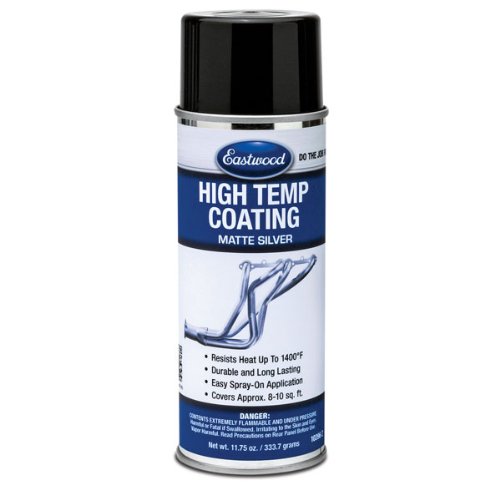
- Best for: A bright, durable finish on exhaust manifolds needing reflective protection.
- Features: Resistant up to 1400°F; matte silver sheen; easy brush or spray-on application; aerosols cover about 6 sq ft.
- Why chosen: Provides a high-visibility, heat-tolerant coating for performance engines.
- Caution: Silver sheen may alter appearance; ensure color preference before large-scale use.
Thermo Tec 12001 Black High Heat Coating

- Best for: Protecting wrap and metal surfaces from heat and chemical exposure.
- Features: Seals pores, protects wrap from abrasion and spills, enhances durability; suitable as a coating on metal.
- Why chosen: Extends wrap life and reduces heat transfer to surrounding components.
- Caution: May require multiple coats for full pore sealing; apply in a well-ventilated area.
Buying Guide: Key Considerations For Header Coatings
What heat range do you need? Choose coatings that match your exhaust temperatures, typically 1200°F–1800°F for headers. Do you want internal or external protection? Internal coatings help contain heat within pipes, while external coatings reduce under-hood temperatures and protect surrounding metal surfaces. Is color important? Some products offer a cast-iron look or a bright silver finish; consider aesthetics for visible engine bays. How easy is application? Aerosol sprays, extension nozzles, and brush-on formats affect coverage in tight spaces. Do you need a clear finish? Clear coatings preserve the metal appearance while delivering protection. Finally, verify surface compatibility with headers, manifolds, and wraps before applying any coating.
Application Tips
- Clean and degrease headers before coating for best adhesion.
- Follow curing or drying times exactly as specified by the manufacturer.
- Apply in thin, even coats to avoid runs or pooling.
- Use proper ventilation and protective gear during application.
- Test coating on a small area first to confirm color and compatibility.
FAQ
- Q: Are ceramic coatings suitable for headers? A: Yes, many high-temperature coatings are designed for headers and exhaust components, providing heat resistance up to 1800°F or more.
- Q: Should I use an internal or external coating for exhaust systems? A: Internal coatings contain heat inside the tubing, while external coatings protect outer surfaces and reduce under-hood temperatures.
- Q: Can these coatings be used on manifolds and wraps? A: Several coatings are formulated to work on manifolds and wraps; verify the product’s intended use on metal and wraps before applying.
- Q: How long does curing take? A: Curing times vary by product; follow the manufacturer’s instructions for best results and performance.
- Q: Do coatings require primers? A: Some products include ceramic or high-heat properties in a single can, while others may be compatible with primers; check product details.
- Q: Will these coatings change engine aesthetics? A: Finishes range from clear to cast-iron gray to bright silver, allowing you to match or contrast with your engine bay.
