
Want a reliable check engine diagnostic tool that helps pinpoint problems fast? This guide highlights popular OBD2 scanners that read and clear codes, view live data, and help you decide when a repair is needed. Best for DIYers, weekend mechanics, and anyone who wants quick, actionable diagnostics. The top picks cover a range of features from basic code reading to advanced live data and system checks. Use this overview to compare capabilities, ease of use, and what each tool is best for in real-world scenarios.
| Product | Best For | Key Benefit | Notable Limitation |
|---|---|---|---|
| ANCEL AD310 Classic Enhanced | Budget buyers & first timers | Fast code read/clear and live data from a compact device | Limited advanced diagnostics beyond basic OBDII |
| FOXWELL NT301 | Users needing EVAP & O2 sensing insight | Reads DTCs, EVAP system tests, and O2 sensor data | Won’t scan ABS or SRS in most cases |
| VDIAGTOOL VD10 | DIY enthusiasts seeking broad code reading | Easy diagnosis with DTC lookup and I/M readiness | Limited support for ABS/SRS |
| ANCEL AD410 Enhanced | All-round vehicle coverage | Wide vehicle compatibility and extensive DTC library | Engine-focused (not a full-system tool) |
| FOXWELL NT604 Elite | Multi-system checker | 5-in-1 scanner including ABS/SRS/transmission with live data | Advanced features come with a learning curve |
ANCEL AD310 Classic Enhanced OBD II Scanner
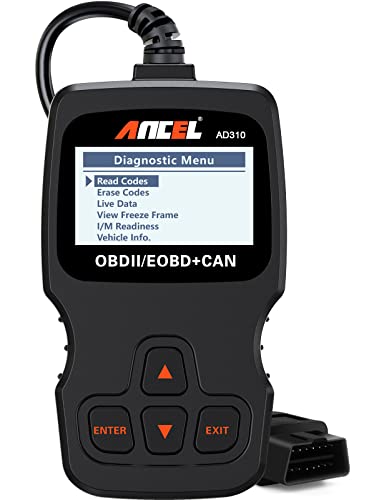
The ANCEL AD310 is a compact, budget-friendly OBD II scanner designed for quick fault-code reading and clearing. It supports 1996 and newer OBD2 protocol vehicles and provides live data, freeze-frame, I/M readiness, and vehicle information. Best for casual users who want a fast, straightforward check engine solution without extra frills. Note that it focuses on emission-related codes and basic live data rather than comprehensive system diagnostics. Caution: always interpret results in context with mechanical inspection.
Who it’s best for: DIY beginners and drivers who want a simple tool to identify and clear engine light codes fast. Why selected: its affordability, reliable basic functionality, and compact design make it a practical first scanner for everyday use. Caution: limited to standard OBD2 functions; advanced ABS/SRS or transmission diagnostics aren’t emphasized.
FOXWELL NT301 OBD2 Scanner

The NT301 focuses on essential CEL diagnostics with enhanced capabilities like EVAP and O2 sensor testing, VIN retrieval, and live data. It’s designed to help determine whether a repair is fully addressing the issue, rather than just turning off the warning light. Best for drivers who want deeper insights into emissions systems and engine performance. Limitation: the tool can show persistent codes that require full repair to clear, and users should ensure correct menu navigation for accurate results.
Who it’s best for: car owners who want to verify repair work and understand emissions-related faults. Why selected: strong diagnostic options for read codes, live data, and EVAP testing. Caution: may require careful menu selection and proper ignition-on state to read and clear certain codes.
VDIAGTOOL VD10 OBD2 Scanner
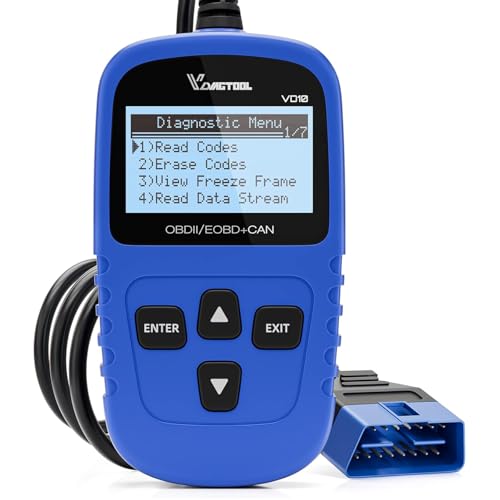
The VD10 is a beginner-friendly diagnostic tool that provides code reading/clearing, live data, freeze-frame, I/M readiness, and vehicle information. Its straightforward interface makes it a practical option for DIYers who want a quick check without extraneous features. Best for: new car owners or hobbyists who want a reliable entry-level scanner. Caution: does not support ABS/SRS in many cases, so you may need a separate tool for those systems.
Who it’s best for: homeowners and hobbyists seeking a simple, affordable diagnostic workflow. Why selected: easy setup, comprehensive basic functions, and built-in DTC definitions for quick interpretation. Caution: consider a more capable model if you need ABS or airbag (SRS) diagnostics.
ANCEL AD410 Enhanced OBD2 Scanner

The AD410 offers wide compatibility with OBDII vehicles and a large DTC library. It supports quick reading and clearing of fault codes, commandable MIL reset, and I/M readiness checks. Best for users who want broad vehicle coverage and a robust database for quick fault interpretation. Limitation: the AD410 is described as engine-focused and does not support other systems like ABS or transmission in some datasets.
Who it’s best for: drivers who need broad OBDII coverage and a large fault-code library. Why selected: strong compatibility and fast diagnostic workflow. Caution: verify that your vehicle’s systems align with the tool’s stated capabilities before relying on it for multi-system checks.
FOXWELL NT604 Elite OBD2 Scanner

The NT604 Elite is a versatile, 5-in-1 diagnostic tool that covers engine, ABS, SRS, and transmission checks with live data. It’s designed for car owners who want a multi-system overview and the ability to print or review data later. Best for: users who need more than engine diagnostics and want to monitor multiple systems. Caution: the learning curve is higher; not a repair tool—scans guide you to the potential root cause but do not fix issues automatically.
Who it’s best for: multi-system checkers and enthusiasts who want comprehensive diagnostics beyond the engine. Why selected: broad coverage, live data, and data handling capabilities in a single device. Caution: ensure you have time to learn the interface for optimal use.
Buying Guide: Choosing the Right Check Engine Diagnostic Tool
What should you consider when selecting a scanner? Begin with budget, required system coverage, and ease of use. If you mostly need engine fault codes and simple live data, a basic reader like AD310 or VD10 may suffice. For deeper insights into emissions and O2/EVAP systems, NT301 or AD410 provide enhanced diagnostics. For multi-system health checks, NT604 Elite offers ABS/SRS/transmission data, though it’s more complex to operate.
Key questions to ask yourself:
– Do you need ABS/SRS or transmission diagnostics, or just engine codes?
– Will you benefit from VIN retrieval, data logging, and I/M readiness checks?
– Is a large built-in DTC library important for quick lookups?
– Do you prefer a one-button “I/M Readiness” feature for smog tests?
– Will you use the tool mainly at home or occasionally in the shop?
Practical tips:
– Verify vehicle compatibility with the scanner’s supported protocols (OBDII, CAN, etc.).
– Check whether the device powers from the vehicle or requires USB/battery power.
– Look for a clear display, intuitive menus, and reliable build quality for field use.
– If you work on multiple vehicles, consider models with broader system coverage.
Frequently Asked Questions
- What is an OBD-II scanner and why do I need one? It reads fault codes from your vehicle’s onboard computer and helps you identify issues that trigger the check engine light.
- Can these tools clear codes permanently? They can clear codes after the underlying issue is addressed, but some codes may reappear if the problem persists.
- Do all scanners work with ABS or SRS? Not all do; multi-system scanners like NT604 Elite offer ABS/SRS, while budget models may focus on engine codes.
- Will a scanner fix my car? No, it diagnoses potential problems. Repairs must be performed to clear codes and reset monitors.
- Is VIN retrieval important? VIN retrieval helps identify the exact vehicle model and engine; it’s useful for precise code lookups and data logging.
- What does I/M Readiness indicate? It shows whether the vehicle is ready for emissions testing, which is helpful before smog checks.
