
When the check engine light (CEL) comes on, you need a reliable scanner that quickly identifies the fault and helps you decide if you can DIY or need professional help. This guide highlights five essential OBD2 scanners that cover common needs—from simple DTC reading to live data, readiness checks, and basic EVAP or O2 sensor monitoring. These picks are ideal for DIYers, weekend mechanics, and vehicle owners who want fast, accurate insights without breaking the bank.
Summary table of selected products
| Product | Best For | Key Benefit |
|---|---|---|
| ANCEL AD310 | Everyday drivers | Fast code reading/clearing; compact and durable |
| VDIAGTOOL VD10 | DIY enthusiasts | Easy to use; large built-in code library |
| MOTOPOWER MP69033 | Budget-conscious buyers | Wide protocol support; clear LCD |
| FOXWELL NT301 | Detail-oriented users | Live data, VIN retrieval, MIL reset |
| Innova 5210 | All-round diagnosis | Code read/clear plus battery tester and live data |
ANCEL AD310 Classic Enhanced OBD II Scanner

The ANCEL AD310 is a compact, budget-friendly OBD II scanner designed for quick fault-code reading and clearing. It supports 1996 and newer vehicles with OBDII protocols and offers live data, freeze-frame viewing, I/M readiness, and vehicle information. This model is best for drivers who want a straightforward, fast check to determine the severity of a CEL and to verify problem resolution after repairs. Its sturdy build and visible button labeling reduce user error in tight engine bays. A potential limitation is that it focuses on core CEL functions; advanced system diagnostics are not included.
Who it’s best for: Homeowners and everyday drivers who want a reliable, no-frills device to diagnose emission-related codes and confirm repairs. Why selected: It combines speed, ease of use, and a compact design that travels well in a tool bag or glove box.
VDIAGTOOL VD10 OBD2 Scanner
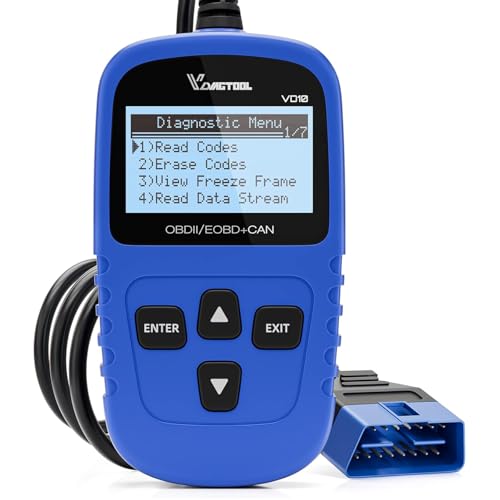
The VD10 is designed as a user-friendly tool for DIYers and hobbyists. It reads and clears codes, displays live data, and shows I/M readiness and vehicle information directly on a TFT screen. It supports generic and manufacturer-specific codes from the built-in database (over 3,000 codes). This scanner is best for users who want fast code lookups and a clearly presented interface. Limitation: while it covers many codes, it may not have the depth of dealership-grade tools for all advanced systems.
Who it’s best for: Casual car owners who want quick, on-vehicle diagnostics without online lookups. Why selected: It provides comprehensive DTC details from a broad code library in an easy-to-read format, reducing guesswork when chasing a CEL cause.
MOTOPOWER MP69033 OBD2 Scanner

The MOTOPOWER MP69033 offers broad protocol support for most 1996 US, 2000 EU, and Asian cars, including newer OBDII and CAN vehicles. Its 2.8-inch LCD provides a clear view of live data, freeze frames, and code definitions. It is ideal for buyers who need a single, affordable tool that handles multiple cars and displays essential data without requiring a separate battery or charger. Cautions: the device draws power from the car via the OBDII port; no standalone power source is available.
Who it’s best for: Budget-conscious owners who own multiple vehicles or maintain a small fleet. Why selected: Wide protocol support and a readable display make it a strong all-purpose diagnostic tool at a low cost.
FOXWELL NT301 OBD2 Scanner

The FOXWELL NT301 focuses on the essential CEL workflow with the ability to read and clear DTCs, access emissions readiness, and turn off the MIL after repairs. It also supports live data, VIN retrieval, and a few enhanced modes like O2 sensor tests and EVAP leak checks. This model is a practical choice for those who want detailed diagnostic capabilities without stepping into more complex tool ecosystems. Limitation: performing deeper diagnostics (ABS, SRS, or transmission beyond basic checks) requires a more advanced tool.
Who it’s best for: Technically minded users who value VIN retrieval and live data alongside standard code reading. Why selected: It balances essential OBD2 features with practical advanced modes for a broader diagnostic view.
Innova 5210 OBD2 Scanner & Engine Code Reader

The Innova 5210 consolidates code reading and clearing for engine and some ABS codes, plus a built-in battery tester for the alternator and battery status. It provides live data, oil reset capabilities, and a broad vehicle range. This makes it suitable for drivers who want an all-in-one diagnostic and maintenance tool. Note that coverage for ABS or other subsystems can vary by vehicle, and some features may not be available on older models.
Who it’s best for: Car owners seeking a versatile diagnostic tool with battery health checks and live data in one device. Why selected: Combines engine diagnostics with practical maintenance utilities for ongoing vehicle health monitoring.
Buying Guide: How to Choose the Right Check Engine Light Scanner
What to prioritize: core DTC reading vs. advanced diagnostics
Choose a scanner with robust DTC lookup and clear code definitions for quick repairs. If you want more depth, pick models that offer live data, freeze-frame, and OEM-specific codes to pinpoint root causes.
Vehicle coverage and protocols
Look for OBDII compatibility across all 1996+ vehicles and check for CAN and other protocols mentioned by the seller. Broad protocol support helps with younger vehicles and imports alike.
Display and usability
A larger screen, clear backlight, and intuitive menus reduce misreads in dim engine bays. A compact, durable body helps with transport and field use.
Power source and portability
Most tools draw power from the OBDII port. If you need standalone capability, confirm whether a scanner can operate without a vehicle connection or batteries.
Additional features to consider
- Live data and graphing for real-time insight
- VIN retrieval and I/M readiness checks for emissions testing
- Specialized functions like EVAP tests, oxygen sensor checks, or battery health testing
- Code library size and update availability
Compatibility and updates
Check product pages for coverage reminders and update policies. Some models rely on periodic firmware updates to stay current with new codes.
Frequently Asked Questions
- Do I need an expensive scanner to read check engine codes? No. Many reliable options provide core DTC reading and clearing at accessible prices, suitable for home diagnostics and basic repairs.
- Can these scanners fix the problems they diagnose? No. Scanners identify fault codes and basic data; repair decisions require the user to address the underlying issues.
- Will a scanner clear fault codes permanently? Clearing codes removes the MIL momentarily, but if the fault isn’t resolved, codes may return once the system detects the issue again.
- Do these tools work on all makes and models? Most are designed for OBDII-compliant vehicles; coverage can vary for specific makes and models, especially older or non-OEM vehicles.
- Is live data important for diagnostics? Yes. Live data helps verify repairs and monitor real-time sensor behavior, improving diagnostic accuracy.
- Do I need a battery or charger for these scanners? In most cases no; many models power directly from the vehicle’s OBDII port. Some may require no external power source.
