
Looking for fixed gear wheels that balance light weight, rigidity, and value? This guide highlights five well-rounded options ideal for urban riders, track enthusiasts, and anyone upgrading a single-speed setup. We’ll explain who each wheel is best for, plus practical considerations like depth, braking surface, and hub compatibility. The following selections are chosen for clear performance cues and straightforward comparison.
Summary table of selected products:
| Product | Depth | Material | Best For | Note |
|---|---|---|---|---|
| Superteam 88mm Carbon Clincher Fixed Gear Wheelset | 88 mm | Carbon Fiber | Riders seeking high aero depth and stiffness | Rear/Front pair available |
| SUPERTEAM 88MM Rear Only Carbon Wheel | 88 mm | Carbon Fiber | Upgrade for speed and braking stability | Rear-wheel option |
| Queen Bike 50mm Track Wheel | 50 mm | Carbon Fiber | Everyday track and street use | Includes cog |
| Mavic CXP Elite Track Wheelset | Standard track depth | Alloy with carbon-like performance | Budget-conscious upgrade | Silver finish option |
| Origin8 700C Fixie Wheelset | 42 mm rim, 100/120 mm hubs | Alloy/Magnesium-inspired look | Solid value and bolt-on setup | Front/Rear compatible |
Superteam 88mm Carbon Clincher Fixed Gear Wheelset
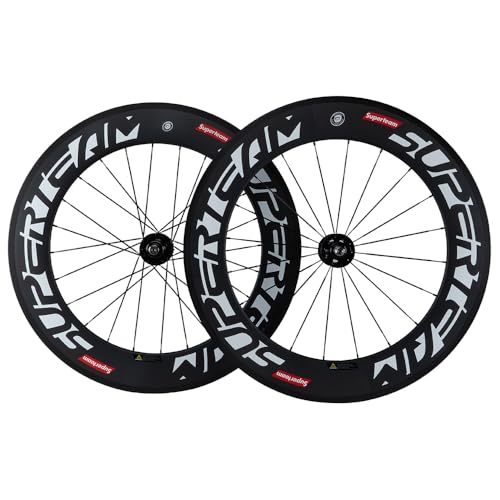
Best for riders who want a high-depth carbon wheelset with strong straight-piber carbon layers and solid weight distribution. The wheelset weighs about 2170g±50g per pair, indicating a robust build for track and street use. This option suits riders prioritizing stiffness and aero performance. Caution: carbon wheels require careful braking technique and compatible brake pads for optimal stopping power on varied surfaces.
SUPERTEAM 88MM Rear Carbon Wheel

Best for riders upgrading an existing fixed-gear bike where rear-wheel strength and impact absorption matter. Features describe carbon wheels with good impact absorption, corrosion resistance, and a basalt braking surface. Best for riders who want better speed retention and reduced fatigue on rough pavement. Caution: designed as a rear wheel; ensure front wheel compatibility before purchase.
SUPERTEAM 700C Full Carbon Fiber Wheelset 38/50/60/88MM

Best for riders who want a versatile depth range in one carbon wheelset. With 38/50/60/88mm options, this wheelset supports various riding styles, from steady city commuting to higher-speed track efforts. The consistent 2:1 spoke weave improves stability and stiffness. Limitation: exact depth choice affects handling and braking feel; pick depth based on typical riding conditions.
Queen Bike 50mm Carbon Fiber Track Wheel with Cog

Best for riders seeking a balanced mid-depth carbon wheel with integrated cog. It emphasizes lightness and good impact absorption with a basalt braking surface. Best for daily use on street-to-track transitions. Caution: 50mm depth can be less aero in crosswinds compared to deeper rims.
SUPERTEAM 700C Carbon Fiber Wheelset 38/50/60/88MM (38MM Depth)
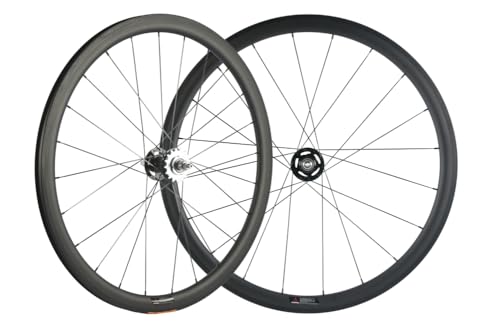
Best for riders who want a lighter 38mm-depth option within an all-carbon lineup. The 2:1 spoke weave helps with stability, and the rim’s basalt braking surface aids consistent stopping power. Choose this if you plan city-to-track transitions and want a more forgiving handling profile. Caution: the 38mm depth is less aero than deeper variants at high speeds.
Mavic CXP Elite Track Wheelset

Best for riders seeking a durable alloy-based track wheelset with reliable performance. The sealed OR8 hub and SS-1101 technology promise smoother operation and durability in varied weather. It’s a practical upgrade for riders prioritizing longevity and ease of maintenance. Caution: alloy rims may not offer the same weight savings as full carbon options.
Origin8 700C Fixie Wheelset

Best for budget-conscious riders who want bolt-on axles and a sturdy, straightforward setup. This wheelset uses a 42mm rim and 100-120 mm hubs, offering reliable performance for fixed-gear daily use. Caution: magnesium-like appearance can be tempting for styling, but performance may differ from high-end carbon options.
Buying Guide: Key Purchase Considerations
- Rim depth and aerodynamics: Deeper rims (e.g., 88 mm) offer greater aerodynamic advantage but can feel heavier and wind-sensitive. Choose depth based on typical riding speeds and routes.
- Material and weight: Carbon fiber rims tend to be lighter and stiffer, improving acceleration and cornering. Alloy or mixed-material options often provide greater durability and lower price.
- Braking surface and compatibility: Basalt or carbon braking surfaces influence braking performance, especially in wet conditions. Ensure compatibility with existing brake calipers and pads.
- Spoke pattern and stiffness: A 2:1 spoke weave helps wheel stability and stiffness, which translates to precise handling during sprints and track work.
- Hub compatibility: Confirm axle type (bolt-on, quick-release, or through-axle) and hub width (100/110/120 mm rear) to fit your frame and drivetrain.
- Cog compatibility: Some wheels come with a cog; verify the number of speeds and compatibility with your drivetrain.
Frequently Asked Questions
- What is the main benefit of a deep-section fixed-gear wheel?
Deep sections improve aerodynamics and acceleration but can be more affected by crosswinds; consider your typical riding environment. - Are carbon wheels worth the extra cost for fixed gear bikes?
They offer weight savings and stiffness, benefiting acceleration and handling, but require proper maintenance and braking considerations. - Do I need special brake pads for carbon rims?
Yes. Use pads designed for carbon or basalt rims to maximize braking performance and minimize glaze buildup. - What compatibility should I check before buying?
Confirm hub width, axle type, spoke count, and braking interface to ensure seamless installation with your bike. - Can I mix wheel brands on the front and rear?
Mixing is possible if hub dimensions and braking interfaces match, but it can affect handling consistency; aim for balanced performance. - Is a higher depth wheel better for city riding?
Higher depth improves aero efficiency at speeds; for urban commuting, mid-depth options often provide a balanced mix of handling and benefits.
