
Answering the popular buyer question: which small block Chevy headers deliver better flow, fit, and durability for classic trucks and muscle cars? This guide highlights five solid options and explains who they’re best for, based on fitment, material, and design. Ideal buyers include classic Chevy/GMC enthusiasts, street-to-strip enthusiasts, and those restoring vintage Square Body or third-gen builds. A quick comparison table below helps you pick quickly.
| Product | Engine Family / Fit | Material / Design | Why Choose |
|---|---|---|---|
| TEWOLISES Exhaust Headers For Chevy/GMC | 5.0L/5.7L SBC; 1988-1995 C/K, Blazer, Suburban, Yukon | Laser-cut 7/16″ steel, durable seal | Best for late-80s to mid-90s full-size GM trucks; solid seal and durability |
| Short Tube Headers SBC Headers 1-1/2 in | 1988-1995 C1500/C2500/K1500/K2500; 1992-1995 Blazer/Tahoe/Suburban/Yukon | 304 stainless steel, polished | Best for budget stainless option with good flow and shine |
| Knetegd Stainless Steel Exhaust Headers | Chevy small block SB V8 262–400 (excluding 1989 Camaro RS) | 304 stainless, mandrel bent, TIG welded | Best for broad SBC range with durable stainless build |
| Ceramic Coated Block Hugger Headers | Gen 1 SBC 265–400, tight clearance builds | Ceramic coated, center-dump block hugger | Best for tight engine bays and classic Hot Rod setups |
| Polished Stainless Long Tube Headers | 1973-1987 Chevy/GMC trucks; SBC 265–400 | Polished stainless, long tube design | Best for classic Square Body and lifted applications with strong flow |
TEWOLISES Exhaust Headers For Chevy/GMC

Best for: late-80s to mid-90s GM trucks and SUVs needing a durable, leak-free seal. This header lists a heavy-duty 7/16″ flange and a fitment range including 1988–1995 C/K, Blazer, Tahoe, Suburban, and Yukon with 5.0L or 5.7L engines. The design emphasizes a secure seal and high-temperature durability.
Why selected: It provides a robust flange and explicit fitment notes to help confirm compatibility via Amazon’s garage feature. This makes it a safe choice for buyers who want reliable sealing in demanding heat environments.
Caution: Verify year/model by using the Your Garage feature to confirm compatibility with exact trim and exhaust layout before purchasing.
Short Tube Headers SBC Headers 1-1/2 in
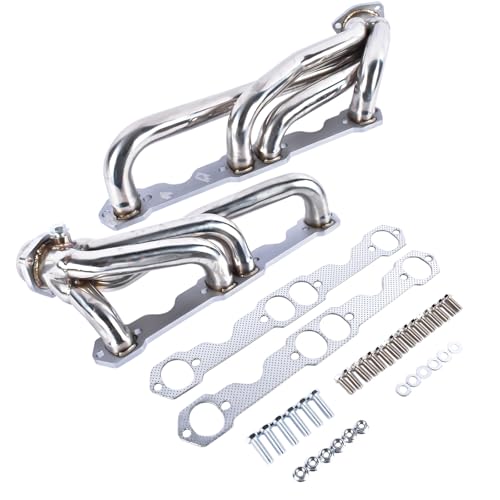
Best for: budget-conscious builders seeking a polished stainless option with straightforward installation for 1988–1995 GM pickups and related SUVs.
Why selected: The 304 stainless and polished finish offer corrosion resistance and a clean look, while the short-tube design favors better ground clearance in tighter engine bays.
Caution: Shorty headers may have fitment challenges in some chassis configurations; always compare flange positions to your exhaust manifold and engine bay layout.
Knetegd Stainless Steel Exhaust Headers for Chevy Small Block

Best for: a broad SBC V8 range with strong stainless construction and mandrel bends. Works well for enthusiasts who want durable stainless headers with broad engine compatibility (262–400 V8, excluding a specific 1989 Camaro RS model).
Why selected: The 304 stainless steel, TIG welds, and polished finish offer a balance of performance, durability, and appearance. Lifespan and heat resilience are emphasized by the mandrel-bent design.
Caution: Confirm engine family and collector position to ensure proper intersection with your exhaust system and frame rails.
Ceramic Coated Block Hugger Headers for Small Block Chevy SBC

Best for: Gen 1 SBC builds with tight clearance in 1923–1959 street rods and early Tri-Five Chevys. The center-dump, block-hugger design helps keep primary tubes close to the block.
Why selected: Ceramic coating reduces under-hood temps and protects the finish, while the center-dump arrangement suits older chassis layouts where space is tight.
Caution: Fitment requires attention to center-dump routing; verify engine bay clearance and exhaust port alignment prior to ordering.
Polished Stainless Long Tube Headers For SBC

Best for: classic 1973–1987 Chevy/GMC trucks and Square Body builds needing maximum flow and a bold look. Works well on lifted 4WD and performance-oriented street setups.
Why selected: Long tube designs typically deliver superior scavenging and horsepower gains across rpm, and the polished stainless steel provides an attractive finish for show-and-go trucks.
Caution: Long tubes can require more clearance and heat shield considerations; check header-to-block clearance, as well as steering and suspension components before ordering.
Buying Guide: Key Purchase Considerations
What matters most when choosing small block Chevy headers?
- Fitment: Confirm year, model, engine size, and exhaust layout. Use manufacturer notes and Amazon’s garage feature where available.
- Material: Stainless steel offers corrosion resistance and durability; ceramic coatings lower under-hood temps and help with heat management.
- Tube length and design: Shorty headers fit tighter spaces; long-tube headers improve top-end horsepower; center-dump designs suit tight engine bays.
- Connector compatibility: Check flange thickness, collector position, and whether spark plug access is affected by the design.
- Installation considerations: Some headers require heat shields, gaskets, or additional hardware; verify interference with steering, steering columns, and frame rails.
FAQ
- Q: Are these headers legal for street use in all states?
A: Header legality varies by local emissions rules. Check your state’s regulations and inspection requirements before installation. - Q: Will these headers improve horsepower?
A: Headers can improve exhaust flow, potentially increasing horsepower and throttle response, especially at higher RPM. Real-world gains depend on the rest of the exhaust and engine setup. - Q: Do I need new spark plugs or heat shields?
A: Some designs require specific plug types or heat shields to prevent clearance issues. Follow the manufacturer’s recommendations for compatibility. - Q: How do I know which header is best for my 1980s GM truck?
A: Identify your engine size and vehicle configuration, then compare flange size, tube length, and clearance with your chassis. Long tubes suit higher rpm; short tubes fit tighter spaces. - Q: What maintenance is needed for stainless vs. ceramic-coated headers?
A: Stainless headers need occasional cleaning to prevent surface rust spots, while ceramic coatings help reduce under-hood temperatures but may require re-coating if damaged. - Q: Can I install headers myself, or should I hire a pro?
A: Many DIY enthusiasts install headers with basic tools, but some fitment issues and exhaust system alignment may require a professional installer.
